
26 August 2026
Event: “Tin AI?” training – “Fact-checking fake news: spotting cognitive traps and digital self-defence skills”
Venue: Diplomatic Academy of Vietnam (Hanoi)
Organisers: Media AI Lab, the Faculty of Communication and External Culture – Diplomatic Academy of Vietnam, and the Digital Trust Alliance (DTA).
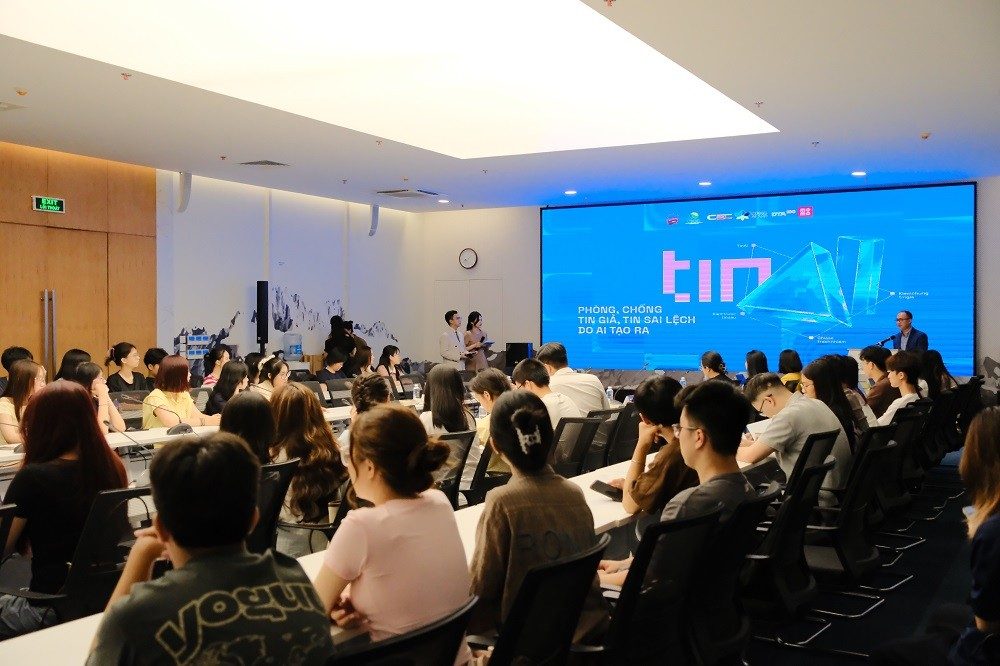
The “Tin AI?” training at the Diplomatic Academy of Vietnam, 26 August 2026.
Media coverage
A number of Vietnamese news outlets covered the training on information-verification skills for students in the age of AI:
- Tuoi Tre: Training students to verify information on social media
- Lao Dong: Students learn to defend themselves against fake news in the AI era
- VietnamPlus (VNA): Training students in fact-checking skills and AI awareness
- Vietnam Traveller: “Check first, believe later”: a cognitive shield for young people in the AI era
- VOH: Training students to verify information on social media
- Van Hoa: The more AI advances, the more young people need verification skills
- Dien tu & Ung dung: Hanoi students trained in fact-checking skills for the AI era
- Giao duc & Thoi dai: Building fact-checking skills for students
- Giao duc Thu do: Building fact-checking skills for students
- Phap Luat Viet Nam: Hanoi students learn to verify fake news in the AI era
- Nha bao & Cong luan: Equipping students with fact-checking skills for the AI era
See also: Media coverage of Media AI Lab.
Media AI Lab organises the “Tin AI?” training
On the afternoon of 26 August 2026, at the Diplomatic Academy of Vietnam, Media AI Lab, together with the Faculty of Communication and External Culture – Diplomatic Academy of Vietnam and the Digital Trust Alliance, ran the “Tin AI?” training for students. It brought together students from institutions including the Diplomatic Academy of Vietnam, the Academy of Journalism and Communication, the School of Journalism and Communication, the People’s Security Academy and Hanoi Law University.
Speakers included Dr Nguyen Dong Anh (Acting Dean of the Faculty of Communication and External Culture, Diplomatic Academy of Vietnam); journalist Dr Ta Bich Loan (representing Media AI Lab); Ms Nguyen Khanh Van (Digital Trust Alliance) and representatives of several news and technology organisations.
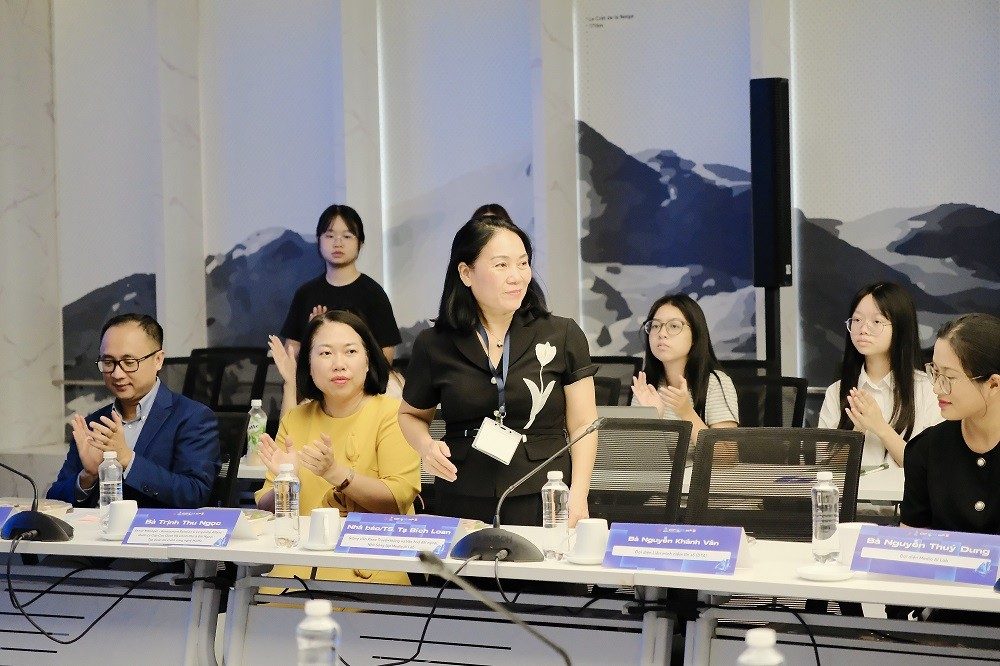
Journalist Dr Ta Bich Loan (Media AI Lab) speaking with students at the programme.
Photo: Programme organisers.
Representing Media AI Lab, journalist Dr Ta Bich Loan stressed that the ability to take in and verify information needs to become an essential skill for young people, as AI-generated content becomes ever harder to tell apart from human-made information.
The speakers analysed common “cognitive traps” in how people take in information on social media, how to judge the reliability of a source, how to trace the origin of content and how to cross-reference data from several independent sources. The message running through the programme was “Check first, believe later”.
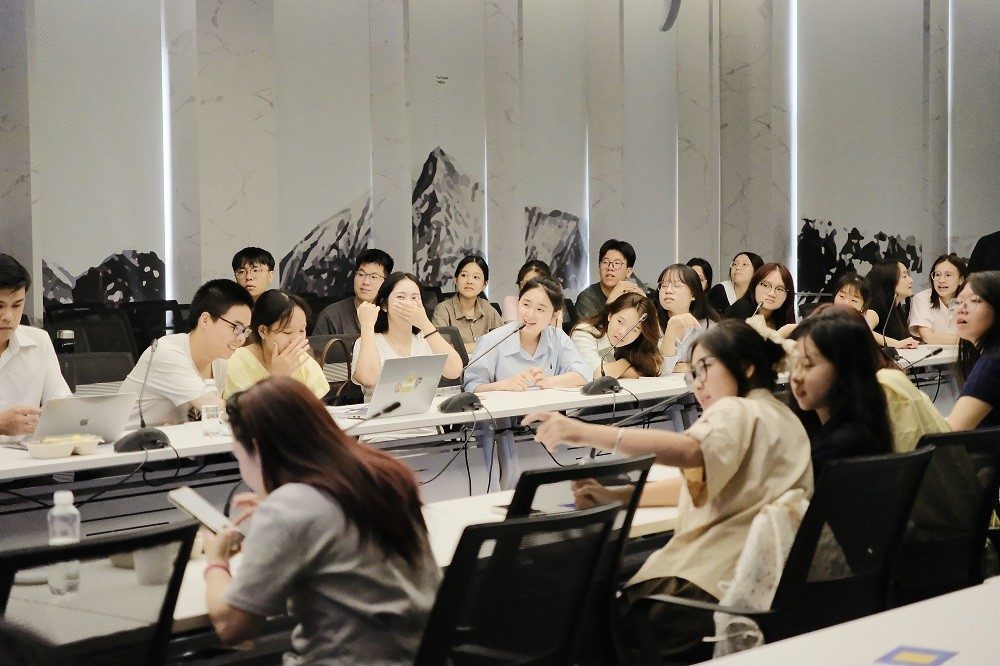
Students from several universities asking questions during the session.
Photo: Programme organisers.
Most of the programme was hands-on. Students worked directly with real and fake information scenarios, tested a verification process and discussed the responsibility of users who share unverified content.
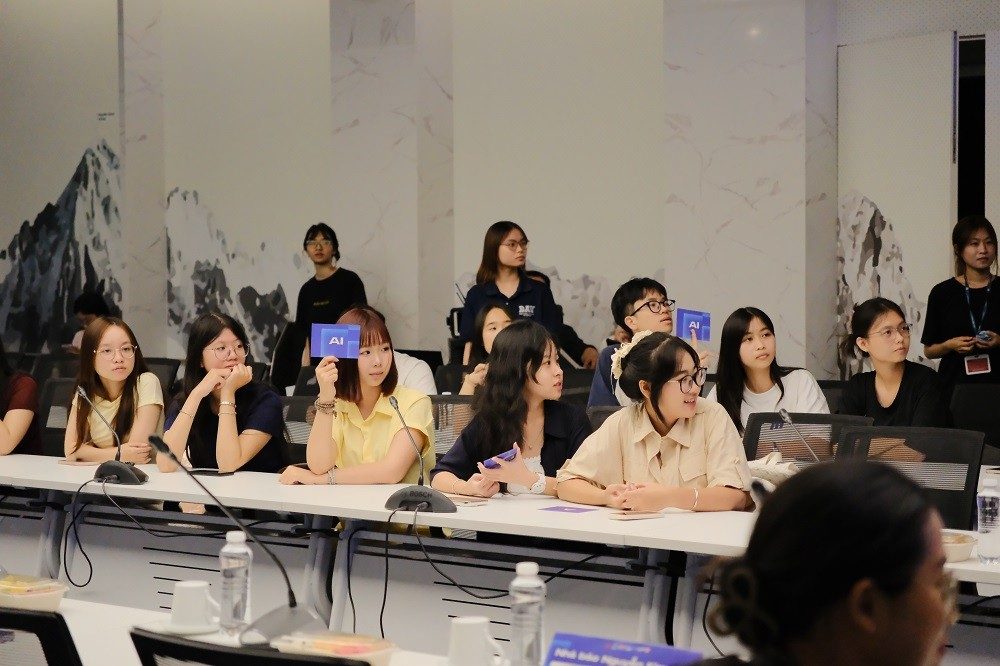
Students practise telling real information from fake through interactive scenarios.
Photo: Programme organisers.
For Media AI Lab, running programmes such as “Tin AI?” is part of its wider focus on research and training on the use of AI in the media, and on the social issues it works on: helping readers, and young people in particular, stay active and clear-headed in the digital information environment.