
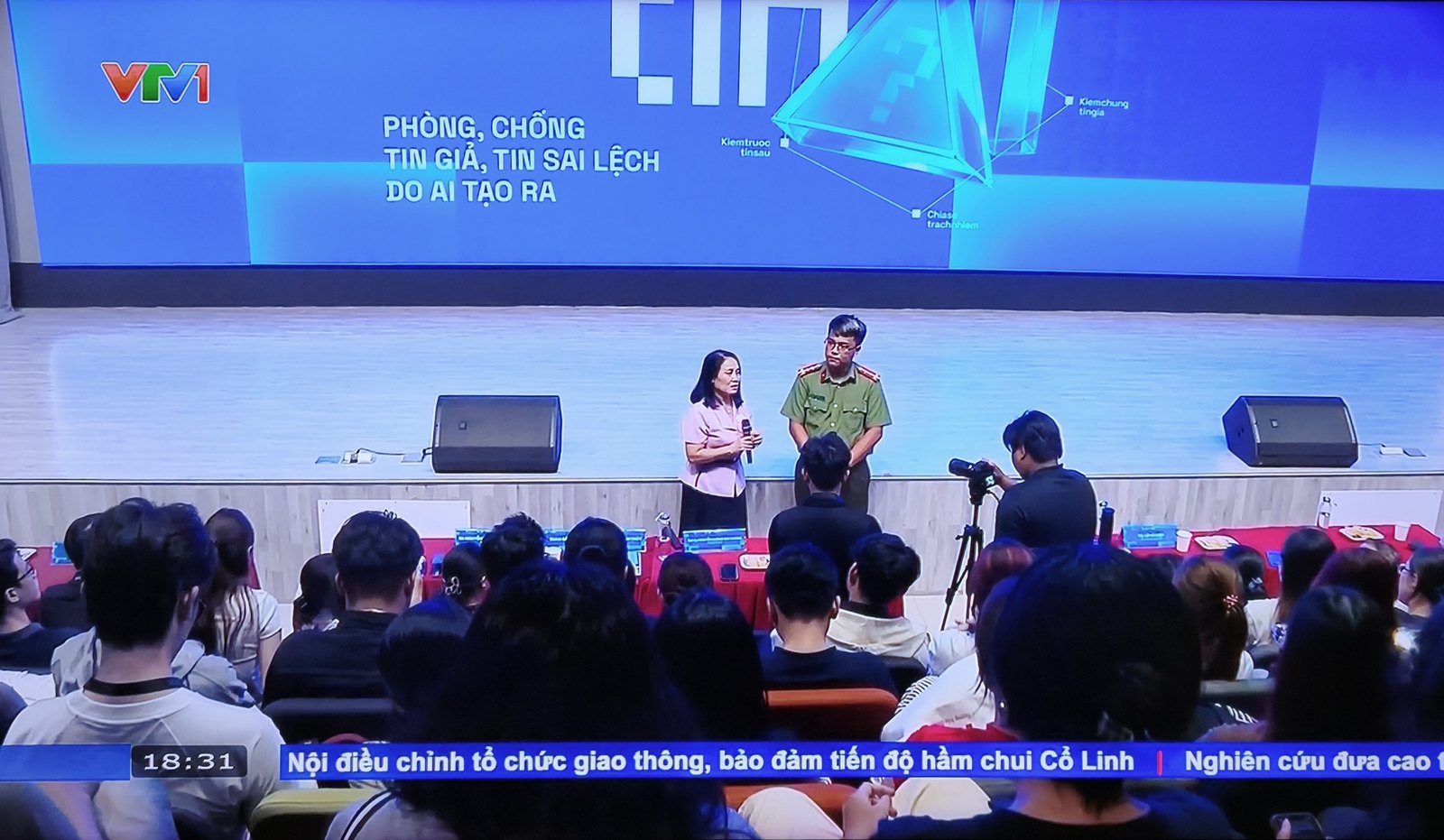
On the afternoon of 28 September 2026 at Van Lang University (Ho Chi Minh City), Media AI Lab partnered with the Digital Trust Alliance (DTA) and key stakeholders to host the training workshop “Tin AI? Campaign: Fact-Checking – Identifying Cognitive Traps and Digital Defense Skills”. The program brought together hundreds of students from major universities across Ho Chi Minh City, providing them with a practical “fact-checking compass” and digital defense techniques against sophisticated AI-generated disinformation.
1. Dynamic Training Environment at Van Lang University
Following the successful inaugural training session held at the Diplomatic Academy of Vietnam (Hanoi) in August 2026, the Ho Chi Minh City chapter expanded significantly in outreach. The workshop welcomed a broad cohort of students from Van Lang University, Ho Chi Minh City University of Technology (HUTECH), University of Economics and Finance (UEF), and the Posts and Telecommunications Institute of Technology (PTIT).
The initiative was organized with academic and technical cooperation among Media AI Lab, the Faculty of Public Relations and Communications (Van Lang University), the Digital Trust Alliance (DTA), MoMo FinTech Group, alongside representatives from the Cyber Security and High-Tech Crime Prevention Division (Ho Chi Minh City Police Department).
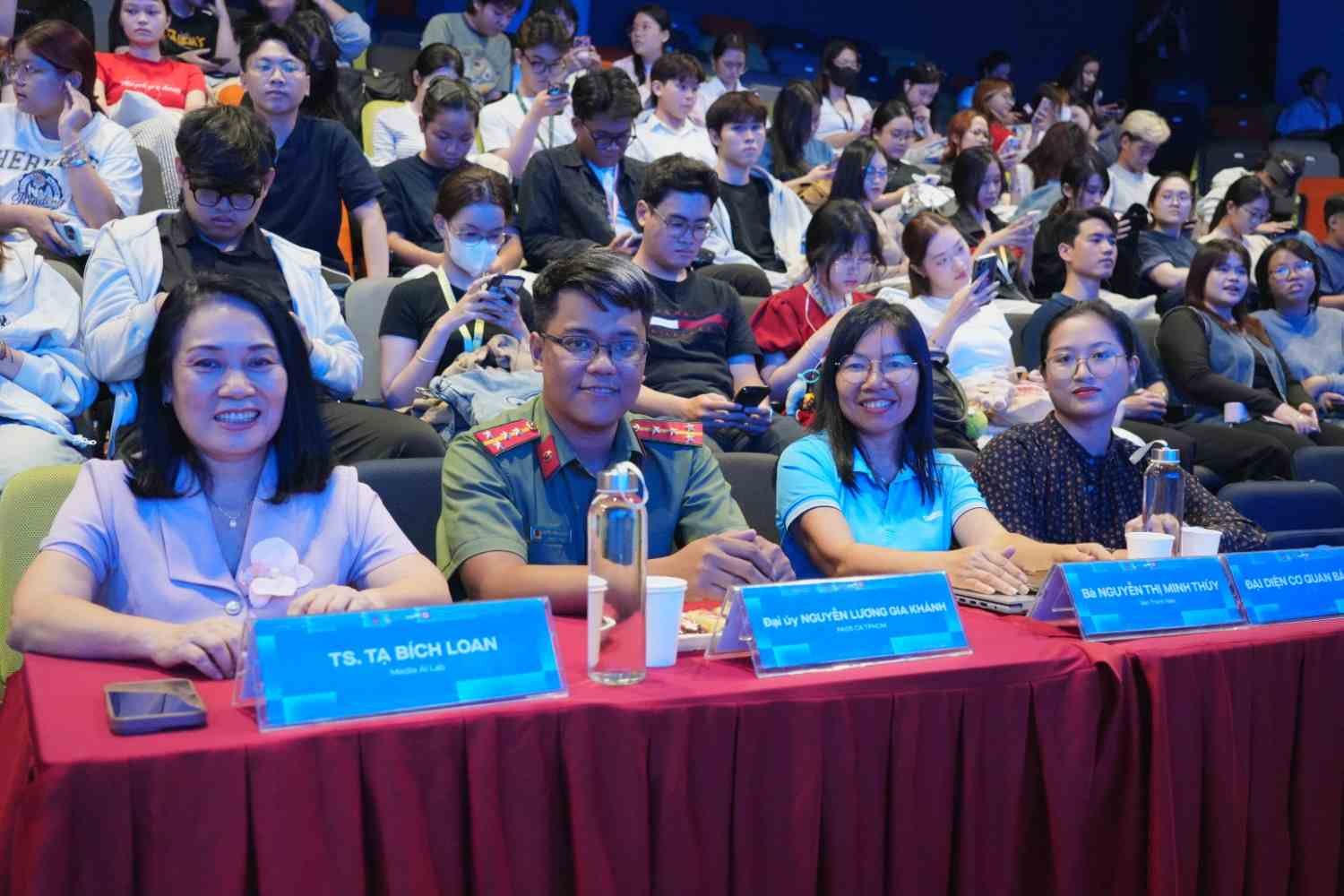
Representatives of Media AI Lab, Van Lang University leadership, the Digital Trust Alliance (DTA), MoMo, and keynote speakers at the workshop. Photo: Organizers.
Opening the session, Dr. Vo Van Tuan – Vice President of Van Lang University and Dean of the Faculty of Public Relations and Communications – highlighted that in an AI-driven digital media ecosystem, disinformation and manipulative content infiltrate youth daily life at breakneck speed. Cultivating the habit of “Check First, Believe Later” serves not only as personal self-defense, but also as a civic responsibility for young digital citizens striving for a transparent and safe information environment.
2. Why Young Audiences Still Consume “Senseless” AI Media and Fall into Deception
A focal point of the workshop was a modern paradox: Why do tech-savvy youths, who often recognize that a clip is synthesized by AI or deliberately sensationalized for views, continue binge-watching, liking, and inadvertently sharing it?
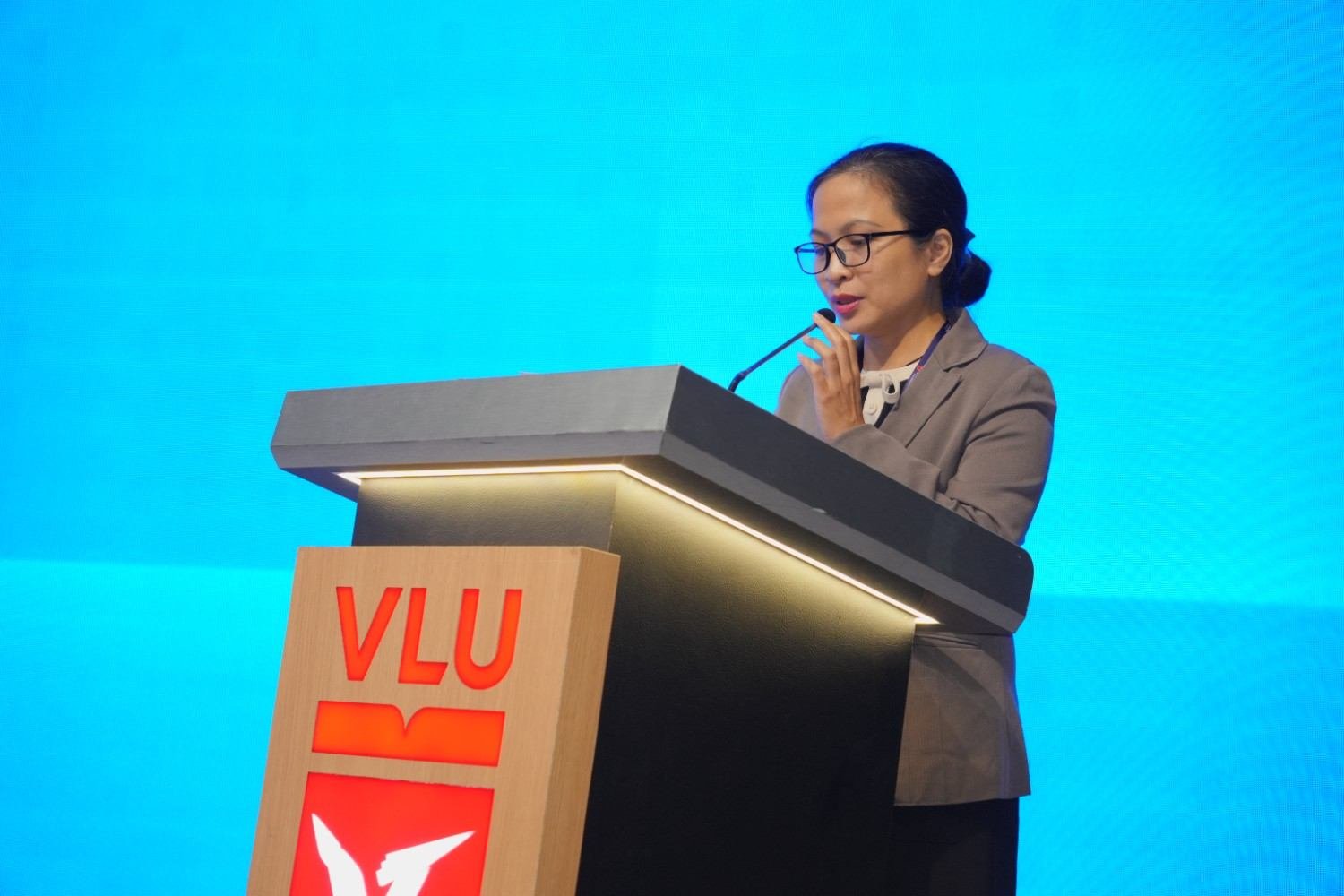
Dr. Le Vu Diep (Faculty of Public Relations and Communications, Van Lang University) analyzes cognitive biases making young users susceptible to click-bait and synthetic media. Photo: Organizers.
Dr. Le Vu Diep and participating media psychologists dissected three primary cognitive traps exploited by algorithmic feeds and generative AI:
- Confirmation Bias: Audiences instinctively embrace and amplify content that flatters their pre-existing beliefs, emotions, or social biases, neglecting to verify factual accuracy.
- The Halo Effect: Fabricated stories gain instant credibility when paired with visual likenesses of celebrities, respected scholars, or counterfeit interfaces mimicking authoritative government agencies and mainstream news outlets.
- The Bandwagon Effect & FOMO: Seeing viral metrics—hundreds of thousands of reactions and trending badges—prompts young users to click, comment, and repost out of fear of missing cultural moments, without assessing collateral consequences.
Specialists cautioned that the menace of “senseless” click-bait goes beyond mere wasted time: it gradually erodes attention spans, desensitizes critical faculties, and degrades public standards for truth.
3. Law Enforcement Insights: Personalized Scams Targeting Students in the AI Era
Sharing insights at the event, Captain Nguyen Luong Gia Khanh (Cyber Security and High-Tech Crime Prevention Division, Ho Chi Minh City Police Department) demonstrated real-world case studies of fraud and deepfake deception.
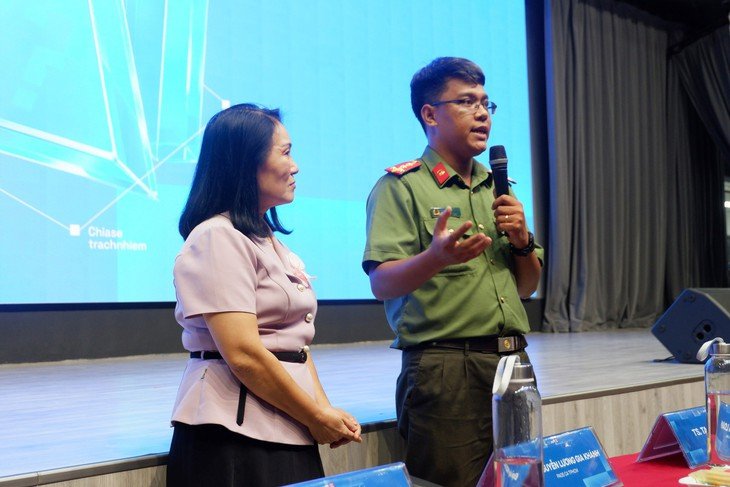
Captain Nguyen Luong Gia Khanh (Cyber Security Division, Ho Chi Minh City Police) details targeted cyber fraud scenarios and digital defense tactics. Photo: K.Anh / Tuoi Tre News.
“We must dispel the illusion that young, tech-savvy people are immune to cyber scams. Perpetrators now engineer customized scenarios for every demographic group. For university students, scammers specifically prey upon searches for part-time jobs, scholarship grants, overseas study opportunities, or stage fake authority notices alleging cyber law violations.”
Captain Nguyen Luong Gia Khanh – Cyber Security Division, Ho Chi Minh City Police
Deceptive schemes have evolved far beyond basic phishing emails. Bad actors now deploy high-fidelity deepfakes and real-time voice cloning of relatives and classmates to elicit unconditional trust. Particularly concerning are ploys coercing students into installing malicious applications under the guise of “national digital identity updates” or “student aid disbursements”, subsequently seizing device control and draining bank accounts.
4. The “Four-Question Compass” and Three-Zone Information Framework
To steer students through the disinformation maze, the organizers presented the Fact-Checking Handbook featuring a Three-Zone evaluation model:
- Safe Zone: Information with verified provenance, clearly identifiable publishers or authors, objective cross-verifiable data, full context, and an absence of commercial bias or manipulative emotional triggers.
- Danger Zone: Anonymous posts, extreme sensationalism, hate speech, obvious factual distortions, or prompts redirecting users to suspect URLs requesting OTP codes and credentials.
- Trap Zone (Highest Risk): Sophisticated hybrids comprising 80% genuine facts blended with 20% strategically manipulated details, often enhanced by AI imagery or audio. This zone presents the highest danger because its foundational premises appear authentic.
To complement this framework, experts urged students to adopt a cognitive Four-Question Compass before engaging with or sharing online material:
- Question 1: Who stands to profit or gain when this narrative goes viral?
- Question 2: What real-world fallout will occur if this information proves false or distorted?
- Question 3: Has this account been verified by reputable journalistic sources or competent authorities?
- Question 4: Is it truly necessary to comment or share right this moment?
Pausing for just a few seconds creates a vital “cognitive buffer”, allowing rational reflection to intercept impulsive emotional reactions.
5. Gamified Fact-Checking Simulations and Student Takeaways
The workshop gained momentum with interactive, gamified scenario challenges. Hundreds of participants collaborated in real time: dissecting subtle anomalies in deepfake footage, analyzing emotionally loaded narratives, performing Reverse Image Searches, and inspecting digital publication timestamps.
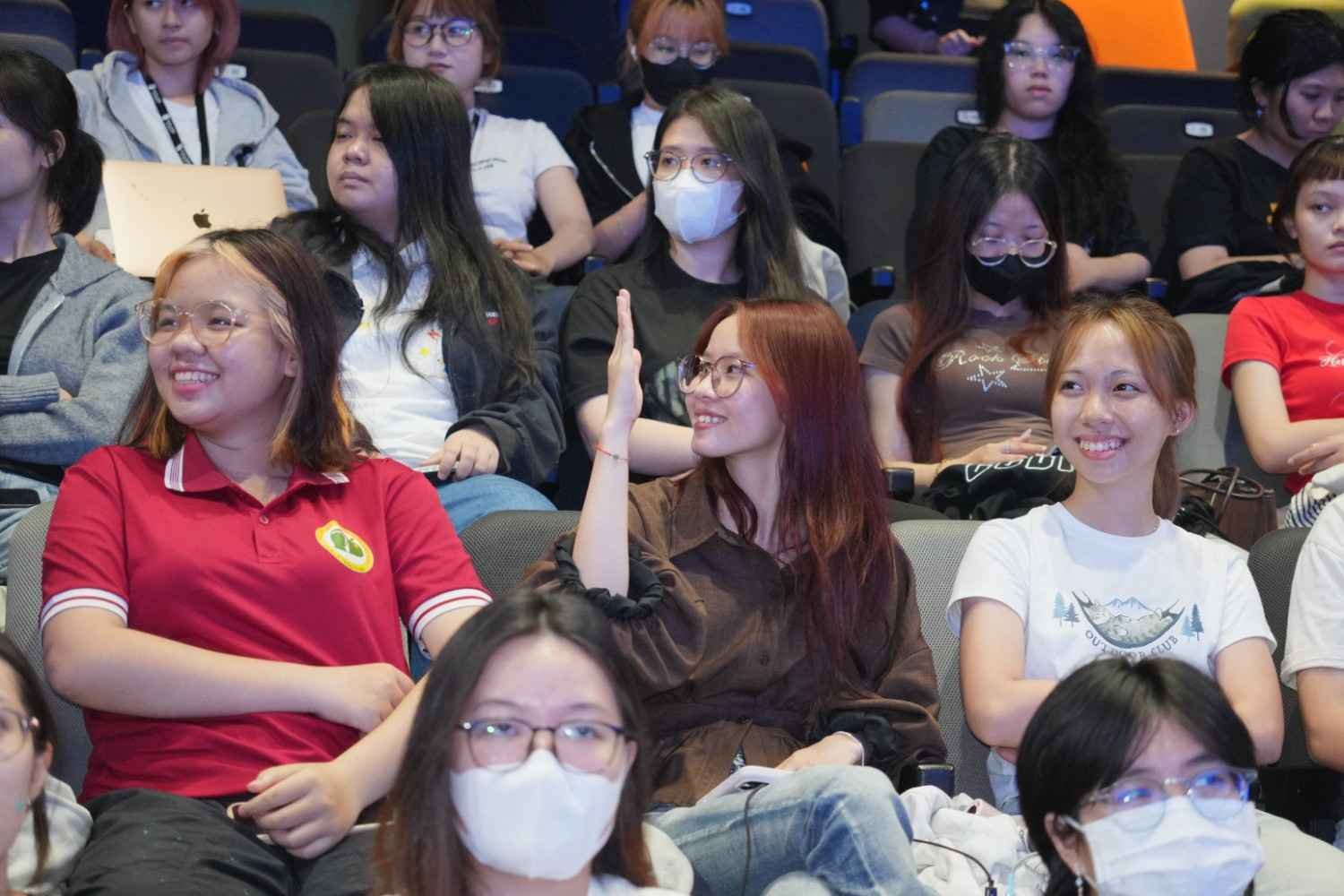
Students actively engaged in simulation challenges, directly inspecting deepfake media and unmasking fabricated claims. Photo: Organizers.
Pham Cong Viet, a student from Van Lang University, shared: “The most valuable lesson I take away from today is the principle of ‘slowing down’. When confronted with information that provokes acute anger, excitement, or sorrow, we must stay calm, cross-reference against authoritative news sources, and verify before jumping to conclusions.”
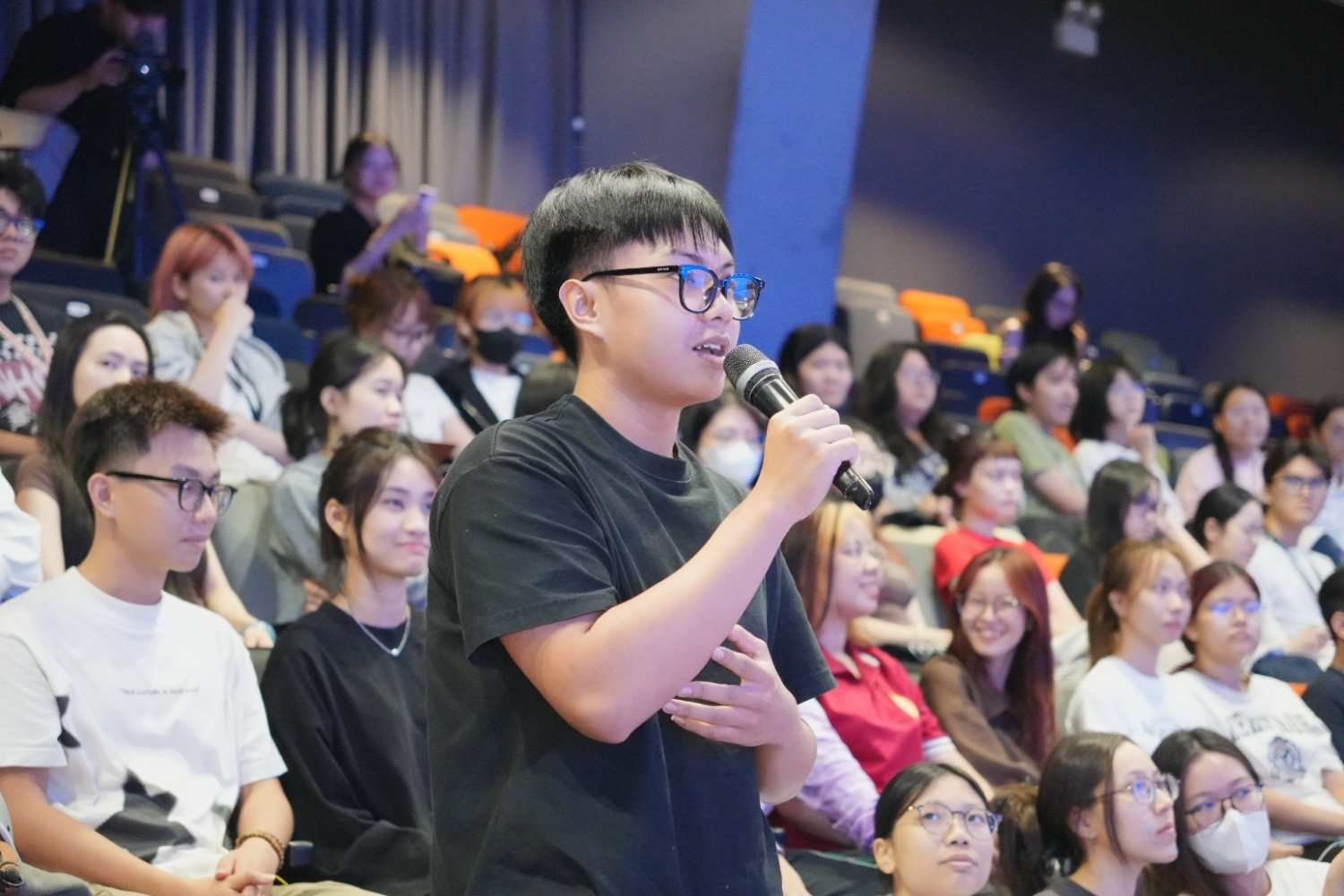
Vibrant team deliberations among students from Van Lang University, HUTECH, UEF, and PTIT. Photo: Organizers.
6. Media AI Lab’s Mission: Building a Human-Centered Digital Defense
Representing Media AI Lab, Journalist Dr. Ta Bich Loan underlined the indispensable role of critical discernment:
“Refraining from hasty belief, sharing, or premature conclusions is the first step toward halting the spread of disinformation. Critical thinking and rigorous source verification are pivotal in empowering the next generation to master their digital destiny.”
Dr. Ta Bich Loan – Founder & Lead Representative of Media AI Lab
For Media AI Lab, tactical workshops like the “Tin AI? Campaign” in Hanoi and Ho Chi Minh City are central to its long-term Research & Training commitment. The Lab remains dedicated to collaborating with universities, newsrooms, and technology partners to ensure that human agency, creative integrity, and media ethics remain the compass of digital transformation.
Explore More
- Media AI Lab organises the “Tin AI?” fact-checking training for students at Diplomatic Academy of Vietnam
- Media AI Lab at ABU Confest 2026: storytelling, technology, and next-generation creative communities
- Research & Training at Media AI Lab
- About Media AI Lab
- In the Press – Media AI Lab
References & Media Coverage
- Tuoi Tre News: Don’t believe hastily, verify and be proactive before sharing
- Lao Dong Newspaper: Students equipped with digital defense skills against AI-generated fake news
- Ho Chi Minh City Police Newspaper: Equipping a ‘digital frontline’ for HCM City youth against AI fake news
- Thanh Nien Newspaper: Why do youth still watch ‘senseless’ AI videos and click-bait disinformation?
- Vietnam News Agency (VNA): Fact-checking: Identifying cognitive traps and digital defense skills