
Building upon the vibrant series of initiatives under the nationwide “Not Alone 2026” Campaign (Chiến dịch Không Một Mình 2026), on the afternoon of 9 October 2026, the Grand Hall of the Diplomatic Academy of Vietnam (DAV) was energized by an intensive training workshop entitled “Safety in Digital Connection: Identifying and Responding to Online Harassment”. Jointly organized by DAV’s Faculty of International Communication and Culture, Media AI Lab, the Department of Cyber Security (Ministry of Public Security), and the Digital Trust Alliance (DTA), the event convened cybersecurity specialists, academic leaders, corporate advocates, and hundreds of university students from across Hanoi.
1. The Alarm Bell: When Digital Harm Is No Longer Someone Else’s Story
In our hyper-connected digital landscape, Generation Z lives, studies, socializes, and creates predominantly within cyberspace. Yet the unprecedented convenience of digital ecosystems brings forth perilous undercurrents. Cyberbullying, non-consensual image sharing, digital gaslighting, intimate photo extortion, and massive doxxing have escalated into widespread and sophisticated threats targeting young netizens.
Perhaps the most concerning obstacle is the emotional paralysis, shame, and hesitation victims face. Many young individuals internalize their trauma in silence rather than seeking institutional or legal intervention. This critical gap in crisis literacy and safety navigation has left countless online users vulnerable to protracted psychological harm.

Journalist Dr. Ta Bich Loan (center) and faculty members of the Faculty of International Communication and Culture (Diplomatic Academy of Vietnam) at the delegates’ table. Photo: Organizers.
Faced with this urgent social imperative, the “Not Alone 2026” Campaign was launched as a multi-stakeholder defense network, championing an empathetic ethos: Every young victim of digital abuse deserves to be heard, supported, and never forced to navigate cyberspace storms alone.
2. Session 1: Dissecting Current Realities and Subtle Forms of Online Harassment
The workshop opened with a dynamic, reality-checking icebreaker titled “Raise your hand if…”. Direct, everyday scenarios flashed across the LED main stage:
- Do you spend time on social media or online gaming platforms daily?
- Have you ever accepted a friend request from a complete stranger?
- Have you ever received a hurtful comment or threatening message that made you feel unsafe?
- Have you ever witnessed someone’s photos or videos shared online without their consent?
Confronted with questions mirroring their daily routines, hundreds of students across the hall simultaneously raised their hands. This vivid moment solidified the workshop’s central thesis: Cyber harassment is not an abstract statistical risk; it is an immediate, pervasive reality unfolding right beside young people in their everyday routines.
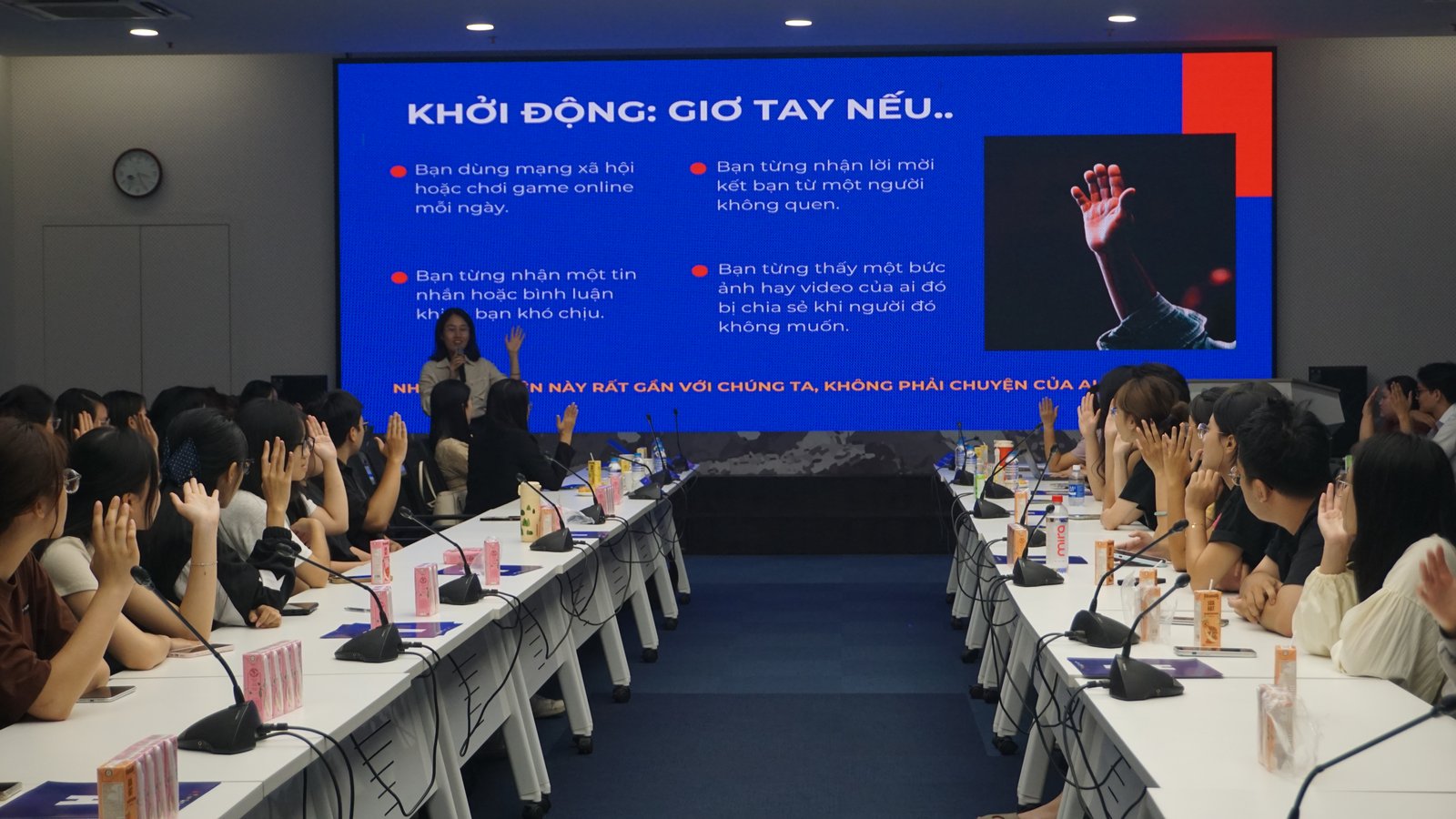
Students actively participate in the “Raise your hand if…” warm-up icebreaker, identifying subtle online harassment risks present in daily digital life. Photo: Organizers.
During the opening session, cybersecurity officers and media scholars, notably M.A. Nguyen Nhu Quynh (Representative of the Digital Trust Alliance – DTA), provided an exhaustive overview of prevalent cyber harassment vectors:
- Personal Data Leaks & Doxxing: Scraping private correspondence, contact directories, and home addresses to publish on online forums, inciting collective cyber harassment.
- Catfishing & Psychological Manipulation: Exploiting hijacked or synthetic profiles to manufacture trust, coercing victims into transmitting sensitive media for extortion or coercion.
- Cyberbullying: Scurrilous commentary and digital ostracism intended to psychologically isolate victims across personal profiles.
Representing the host institution, Dr. Do Huyen Trang, Faculty of International Communication and Culture at DAV, addressed the proactive role of academia in protecting youth:
“In an era where digital environments are an integral dimension of young people’s lives, online harassment has evolved into multifaceted and elusive forms. DAV’s active embrace of the campaign demonstrates proactive leadership in addressing emerging social dilemmas, empowering students to champion the ethos of ‘Connecting without Harm’.”
Dr. Do Huyen Trang – Representative of Faculty of International Communication and Culture, Diplomatic Academy of Vietnam (DAV)
3. Session 2: Verifying Digital Content, Unmasking Deepfakes, and 5-Step Safety Protocol
Transitioning into Session 2, the workshop turned towards tactical empowerment: “Identifying, Verifying, and Responding to Cyber Harassment”. With generative AI tools readily accessible, face-swapping, voice synthesis, and fabricated deepfake media have become potent weapons for reputation sabotage and cyber defamation.
Students actively engaged in live gamified challenges, raising response cards to debate intricate scenarios: How does one inspect algorithmic artifacts in a suspected deepfake smear video? What are the telltale indicators of malicious phishing links embedded within comment threads? And where lies the legal boundary between freedom of expression and online defamation?

Students enthusiastically debate and raise placards in interactive gamified simulations, debunking synthetic deepfakes and manipulated content. Photo: Organizers.
Workshop specialists formalized a practical 5-STEP SAFETY PROTOCOL WHEN CONFRONTING DIGITAL RISKS for students:
- STOP / PAUSE: Halt the conversation or activity that makes you feel unsafe. Do not reply further, do not send additional information, and cease complying with suspicious demands.
- DO NOT SPREAD: Prevent harmful content from propagating further. Do not forward, repost, comment on, or circulate it to other spaces.
- SAVE: Retain necessary forensic evidence for structured support. This includes account handles, URLs, timestamps, message histories, or relevant screenshots.
- REPORT: Direct the issue to competent resolving channels. Report the content or account on the platform and seek guidance from trusted adults when necessary.
- SHARE: Never keep unsafe incidents to yourself. Confide in parents, teachers, caregivers, or someone you genuinely trust.
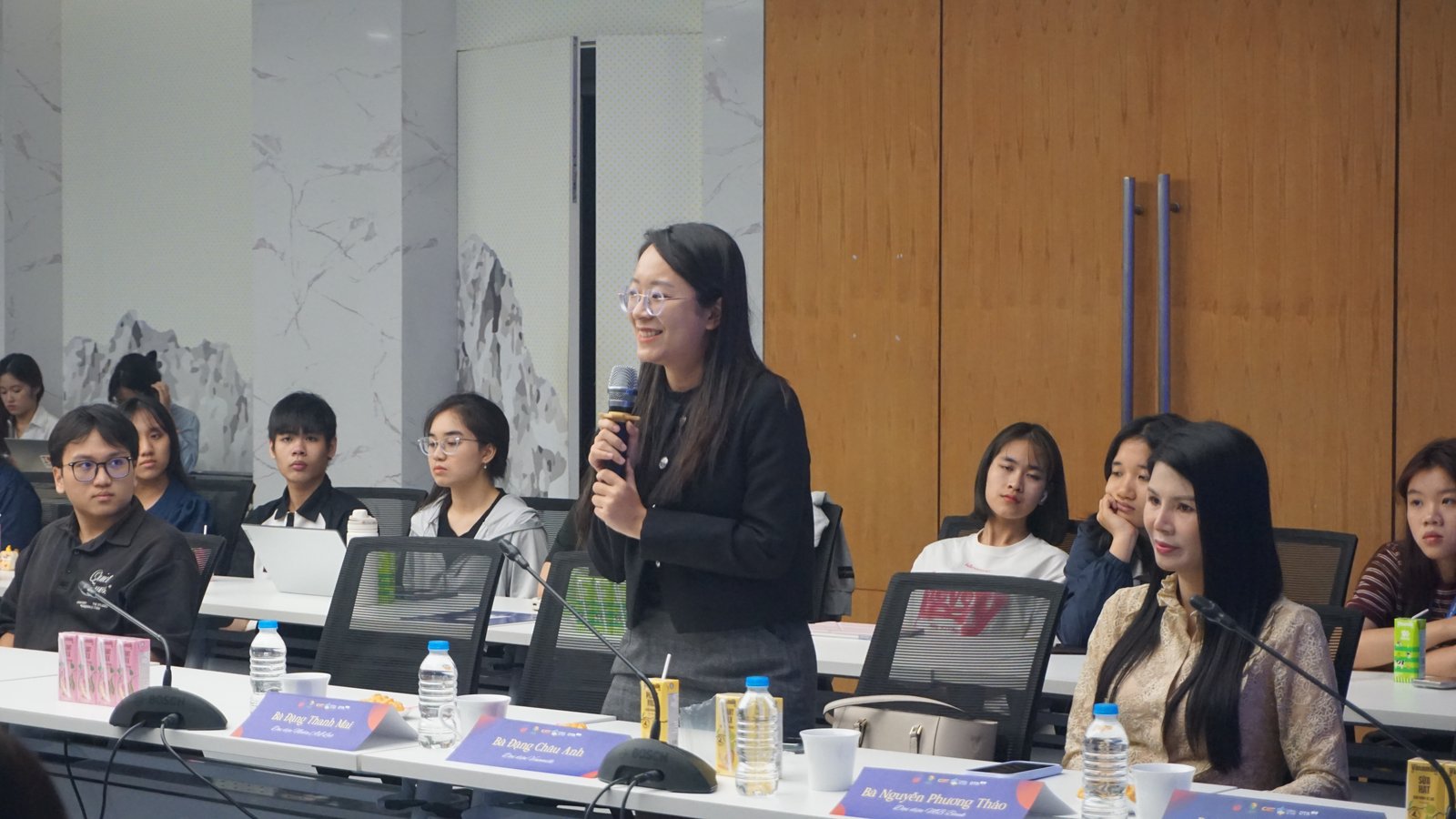
Ms. Dang Chau Anh (Vinamilk) shares the commitment to stand alongside youth in cultivating safe digital spaces. Photo: Organizers.
4. Launching Creative Competitions & Fostering ‘Digital Immunity’
In alignment with DAV’s dynamic student community, the organizers unveiled two major creative competitions running throughout October and November 2026:
- “School Digital Safety Ambassador” Casting: Discovering influential student champions who will inspire peers and cultivate civil communication across campus networks.
- “Online Safety” Short Video & Poster Competition (October – November 2026): Encouraging young creators to leverage short-form video (TikTok formats, reels), infographics, and digital art to translate complex cyber protection lessons into relatable, impactful narratives.
In her capacity as founder of Media AI Lab and keynote mentor, Journalist Dr. Ta Bich Loan shared an inspiring message with the auditorium:
“Cyberspace unlocks limitless horizons for learning and creative innovation, yet it also harbors invisible wounds if we lack ‘digital immunity’. Media AI Lab is deeply committed to walking alongside youth—empowering them not only in mastering AI tools, but in cultivating digital defense, critical discernment, and empathetic solidarity so that no one ever has to face cyber traps alone.”
Journalist Dr. Ta Bich Loan – Founder of Media AI Lab, Lecturer at Diplomatic Academy of Vietnam
The workshop’s actionable insights struck a profound chord with attendees. Reflecting on her takeaways, Vu Ngoc Phuong Chi, a student at the Diplomatic Academy of Vietnam, voiced her realization:
“Previously, I thought simply blocking an account or ceasing interaction was enough. Through this workshop, I realized the necessity of identifying the root problem and proactively reaching out for structured support. When someone suffers cyber trauma, what they need most is empathetic listening and companionship, ensuring that no one stands isolated.”
Vu Ngoc Phuong Chi – Participating Student at Diplomatic Academy of Vietnam
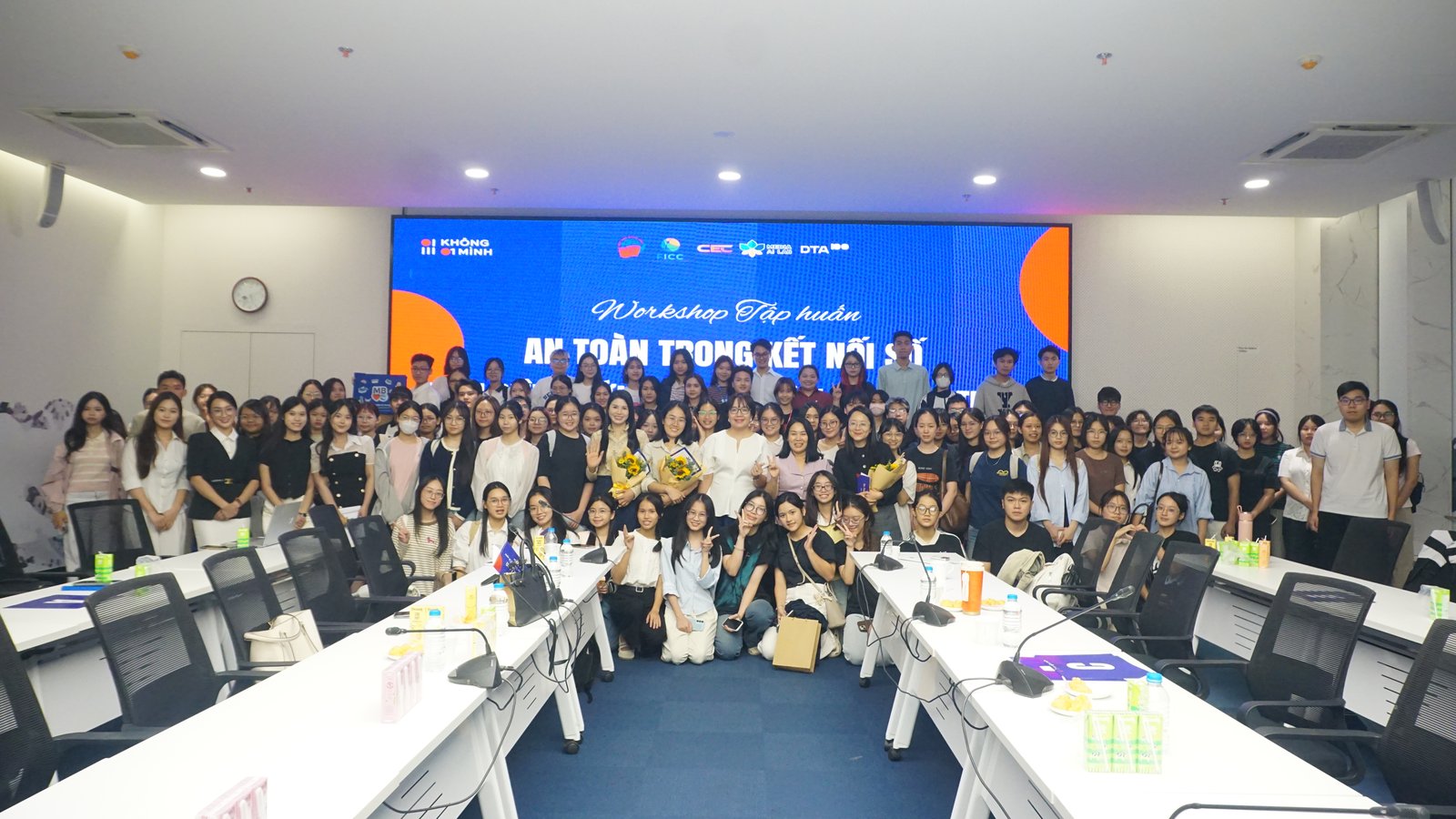
Organizers, experts, corporate partners, and students unite in a commemorative photo, committing to amplify the message “Connecting without Harm” under the Not Alone 2026 Campaign. Photo: Organizers.
As the workshop drew to a close, academic dignitaries, cybersecurity authorities, corporate sponsors, and hundreds of students gathered for a group portrait, united in the campaign’s resolute creed: “Connecting without Harm”. This event marks another foundational milestone in forging an ethical digital ecosystem where human dignity and online trust prevail.
Explore More
- “Tin AI?” Campaign in Ho Chi Minh City: Equipping Students with Digital Defense and Fact-Checking Skills
- Media AI Lab joins “Tin AI?” fact-checking training for students at Diplomatic Academy of Vietnam
- Research & Training at Media AI Lab
- About Media AI Lab
- In the Press – Media AI Lab
References & Partners
- Diplomatic Academy of Vietnam (DAV): Faculty of International Communication and Culture (FICC)
- Department of Cyber Security – Ministry of Public Security
- Digital Trust Alliance (DTA)
- Media AI Lab: Artificial Intelligence in Media Research & Application Lab (mediaailab.com)
- Corporate Partners: Vinamilk, Military Commercial Joint Stock Bank (MB Bank)